
Seamless tubes are made from a solid billet pierced and drawn or rolled to size, so they have no weld seam. They are typically chosen for higher-pressure and critical boiler or heat-exchanger duty. Ruby Infra Projects supplies cold-drawn and cold-pilgered seamless stainless steel tubes to ASTM A213, A249, A269 and A312 and to EN, DIN and JIS standards.
Custom specifications and cut-to-length service are available, backed by in-house cutting, forming, machining, welding and finishing at GIDC Umbergaon. Material test certificates from Government or NABL-accredited laboratories are provided on every batch, under an ISO 9001:2015 certified quality system.
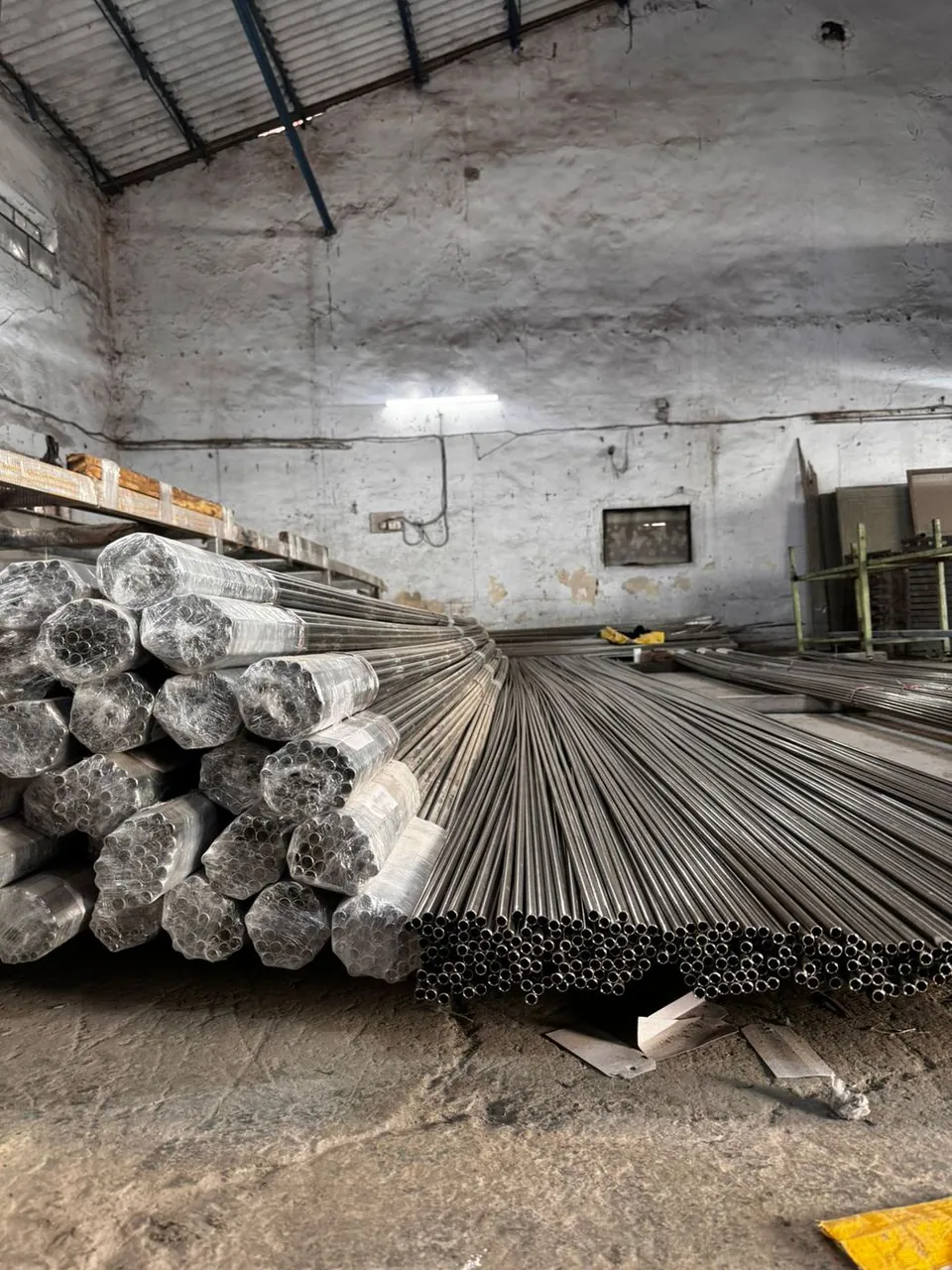
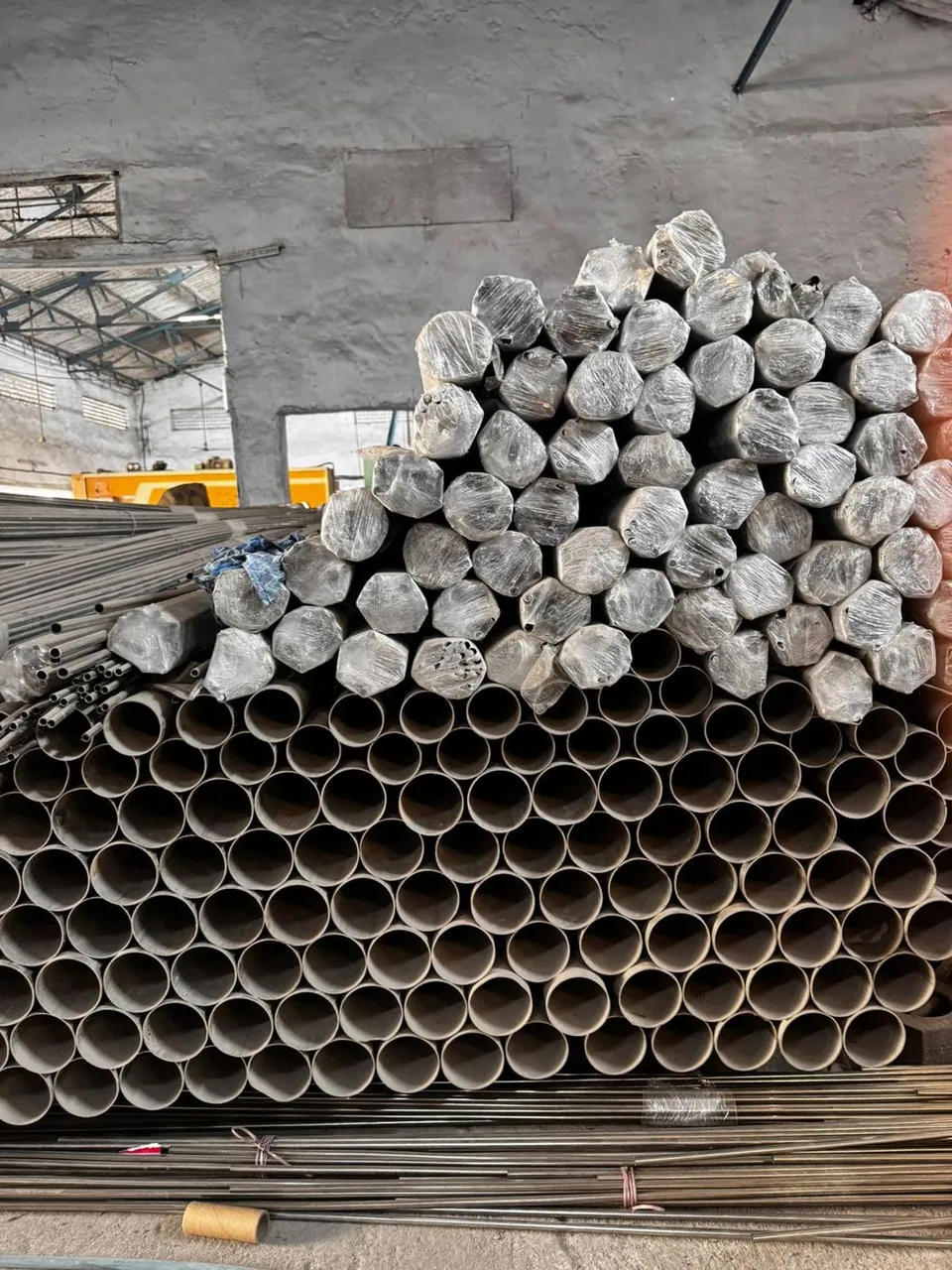
Most orders are for the austenitic grades below. Values are typical ranges; always check the limits in the standard you are ordering to.
| Grade | What it is | Typical use |
|---|---|---|
| 304 | Roughly 18-20% chromium and 8-11% nickel; good general corrosion resistance | General piping, food, interior railings, enclosures |
| 304L | Low-carbon 304, carbon limited to about 0.03-0.035%, so welds resist intergranular corrosion | Welded or heat-exposed service |
| 316 | Adds about 2-3% molybdenum for much better resistance to chlorides and pitting | Marine, coastal, chemical and process environments |
| 316L | Low-carbon 316 for welded service in chloride-rich conditions | Welded process and coastal service |
| 321 | Titanium-stabilised; resists intergranular corrosion after exposure to roughly 425-850 C | High-temperature piping, exhaust, heat-exchanger service |
| Other grades | Other grades can be supplied on request | Send your specification |
Grade guidance is general. Confirm the grade with your design engineer or inspector.
Picking the right specification avoids rejected material and inspection delays.
| Standard | What it covers |
|---|---|
| ASTM A213 | Seamless ferritic and austenitic alloy-steel boiler, superheater and heat-exchanger tubes |
| ASTM A249 | Welded austenitic steel boiler, superheater, heat-exchanger and condenser tubes |
| ASTM A269 | Seamless and welded austenitic stainless steel tubing for general service |
| ASTM A312 | Seamless, welded and heavily cold-worked austenitic stainless steel pipe |
EN, DIN and JIS standards are also supplied. For more detail, read our blog explainer on ASTM A213, A249, A269 and A312.
Both cold drawing and cold pilgering are cold-working processes that reduce a seamless tube to final size and improve dimensional accuracy and surface finish. In cold drawing the tube is pulled through a die over a plug or mandrel. In cold pilgering, shaped rolls and a mandrel progressively reduce the tube, achieving large reductions with tight tolerances.
Stainless steel tubes are often pickled and passivated: pickling removes heat tint and oxide scale, and passivation restores the chromium-rich oxide film that gives stainless steel its corrosion resistance. State your cleaning and passivation requirement, commonly specified under ASTM A380 and ASTM A967, when you send your enquiry.
Both are widely used. The right choice depends on pressure, temperature, inspection requirements and budget.
| Seamless | Welded | |
|---|---|---|
| How it is made | Solid billet pierced and drawn or rolled to size, no weld seam | Strip or plate roll-formed and welded longitudinally, then annealed and sized |
| Typical duty | Higher pressure and critical boiler or heat-exchanger duty | Moderate duty where cost matters: structural, architectural, sanitary and general piping |
A properly made and annealed welded tube performs comparably to seamless in most corrosive environments. See our blog article on seamless vs welded stainless steel tubes.
Ruby Infra Projects supplies cold-drawn and cold-pilgered seamless stainless steel tubes in grades 304, 304L, 316, 316L, 321 and more, to ASTM A213, A249, A269 and A312 and EN, DIN and JIS standards, from its works at GIDC Umbergaon, Gujarat.
Both are austenitic stainless steels. Grade 304 contains roughly 18-20% chromium and 8-11% nickel and suits general corrosion resistance. Grade 316 adds about 2-3% molybdenum, which gives much better resistance to chlorides and pitting, so it is preferred for marine, coastal, chemical and process environments.
The L stands for low carbon, with carbon limited to about 0.03-0.035%. Low carbon reduces chromium carbide formation at welds (sensitisation), which protects against intergranular corrosion in welded or heat-exposed service.
A pipe is specified by nominal pipe size (NPS) and schedule and is used mainly to carry fluids. A tube is specified by its actual outside diameter and wall thickness, with tighter dimensional tolerances, and is used for heat exchangers, boilers, instrumentation and structural applications.
Yes. Material test certificates from Government or NABL-accredited laboratories are provided on every batch. When you request a quote, state the certificate format your project or inspector requires.
Yes. Custom specifications and cut-to-length services are available, backed by in-house cutting, forming, machining, welding and finishing.
Yes. Ruby Infra Projects supplies customers outside India as well as within India and holds an Import Export Code (IEC). Send the grade, standard, size range, quantity, destination country or port and shipping terms, and the team will confirm availability, lead time and a quotation.